PlayerMemo dossier / Independent reference
Mandate Order
A player-first Mandate Order briefing: what is live, how labor, seasons, logistics, and warfare connect, what to inspect when resources stall, and what remains on the roadmap.
- Access
- Early Access · Live
- Release
- Aug 12, 2026
- Mode
- Single-player
- Checked
- 2026-08-12
Should you play Mandate Order now?
Mandate Order is already a broad war-and-city-building simulation, but its Early Access warning matters. The launch build connects settlement construction, civilian needs, farming, production chains, logistics, retainers, policy, diplomacy, conscription, siege defenses, and large real-time battles. Digital Sky also names system feedback, onboarding, mid- and late-game depth, unit pathfinding, performance, stability, and balance as continuing work.
That makes the current release easiest to recommend to players who enjoy finding the weak link in an interdependent simulation. It is a less certain purchase if you need polished tutorials, predictable pathfinding, or a long campaign whose later stages are already settled.
Play now if
- You enjoy cities where labor, transport, storage, food, and defense compete for the same capacity.
- Seasonal preparation is more interesting to you than a steady production multiplier.
- You want settlement management and real-time army control in one continuous campaign.
- You are willing to learn an evolving simulation and report rough edges.
Wait if
- You need a mature beginner experience and highly legible system feedback.
- Unit pathfinding or performance problems quickly spoil large battles for you.
- You mainly want deep late-game state building rather than the current stronghold loop.
- You prefer to buy after balance and the full-version scope are clearer.
The key distinction from a conventional builder is not the number of feature labels. It is the way one decision travels through the city. Drafting workers can slow farms and workshops. A full storehouse can make a working industry appear broken. A road or depot can matter more than another producer. A winter fuel shortage can turn a comfortable food balance into a population crisis. PlayerMemo’s purpose here is to map those dependencies, not repeat the store description.
What is live in Early Access?
The Early Access build went live on August 12, 2026 at 02:00 UTC; Steam can display August 11 in western time zones. The official launch announcement names both Steam and Epic Games Store. Steam lists the game as single-player, with Steam Cloud, Family Sharing, 40 achievements, and 12 interface languages. Simplified Chinese includes full audio; all listed languages include subtitles. Steam store · Launch announcement
At launch, the US Steam price is $19.99, discounted 15% to $16.99 through August 25. Regional prices and the end time shown by your storefront can differ, so treat the live purchase panel as authoritative. Digital Sky targets roughly 12 months in Early Access, while explicitly leaving the 1.0 date dependent on development progress, quality, and feedback.
The present version includes:
- gridless stronghold planning with residences, roads, farmland, storage, workshops, military production, walls, towers, and siege defenses;
- population needs, public opinion, disease, natural disasters, and four-season farming;
- gathering, processing, storage, distribution, trade, and logistics;
- retainers associated with schools of thought, plus governance, policy, titles, and diplomacy;
- conscription, chariots, drawn formations, invasions, wall assaults, and defensive machinery;
- a sandbox structure rather than a narrowly scripted campaign path.
This is a current-feature inventory, not a statement that every part is equally mature. The developers call the core loop playable and separately identify feedback, onboarding, later-game goals, pathfinding, performance, stability, and balance as refinement areas.
One city, one connected system
Mandate Order makes more sense when read as a dependency chain. A settlement does not simply convert wood into a building or grain into a population number. People must be available, inputs must exist, carriers must move them, appropriate storage must accept them, and seasonal or military pressure must not consume the same capacity first.
- 01People
Population provides workers and soldiers, while food, housing, water, health, fuel, and public opinion keep that population viable.
- 02Harvest
Farms, gathering sites, and extraction buildings turn terrain and seasonal windows into raw materials.
- 03Move
Roads, carriers, depots, and relays determine whether inputs arrive before a producer or army needs them.
- 04Store
Granaries, fuel stores, armories, general warehouses, and cargo depots give different goods somewhere valid to go.
- 05Transform
Workshops and military industries convert delivered inputs, but only while labor and output capacity remain available.
- 06Protect
Walls, troops, and siege equipment defend the system by drawing people, equipment, and transport back out of it.
The loop explains why expanding one category in isolation can make the city worse. Another farm may increase uncollected output, another workshop may compete for scarce workers, and another unit may remove the people who kept both supplied. The practical question is therefore not only “Do I produce enough?” but “Can this exact good travel from its source to a valid destination at the moment it is needed?”
Population and labor: every army starts as workers
Population is simultaneously the settlement’s productive base, the group whose needs must be met, and the pool from which troops are raised. The official launch material describes Wu as labor groups assigned to production, transport, and other work. That makes the labor panel a strategic view rather than an administrative afterthought.
Before adding a new production line, look at the labor it needs at three points: extraction, movement, and processing. A staffed mine with no carrier can still starve the workshop. A staffed workshop with no free output storage can still stop. If every link is staffed only during calm weather, conscription or a seasonal labor spike can break the chain.
Residents also create continuing obligations. The official material names food, housing, water, winter fuel, public opinion, and health pressures. Disease and disasters can turn a small reserve problem into a labor problem, because the same population supports recovery. Growth is useful only when the settlement can feed, house, warm, and employ the added people.
The most important military consequence is opportunity cost. Recruiting a soldier does not create a new person; it changes what an existing person does. The city may gain battlefield strength while losing a farmer, carrier, crafter, or builder. This is why a larger army can be both the solution to invasion pressure and the cause of the shortage that follows it.
Farming through four seasons
The store describes a full annual agricultural cycle in which seasons affect city management and the rhythm of marching and warfare. Farming is therefore planning across time, not merely placing enough fields to match today’s consumption.
A useful way to read the year is as four different risks:
- Spring: enough labor and inputs must be available when agricultural work begins; construction enthusiasm can compete with the planting window.
- Summer: continued cultivation shares people and transport with expansion, production, and military preparation.
- Autumn: harvest volume is only valuable if carriers collect it and granaries have room before the weather turns.
- Winter: new food is limited while fuel demand becomes more important, so the settlement lives on preparation and stored reserves.
These are planning principles derived from the documented seasonal, labor, logistics, and storage systems, not fixed calendar formulas. The official sources do not publish universal field-to-population ratios, exact crop yields, or a single safe reserve target. Map conditions, development path, difficulty, balance changes, and disruption all affect those answers.
The robust habit is to track the whole food path: planted capacity, active field labor, harvest collection, granary space, current consumption, and the time remaining before the next dependable harvest. If one element fails, adding fields may hide rather than solve the constraint.
Production, storage, and logistics
Official descriptions name a complete path from raw materials through gathering, processing, storage, and distribution. They also distinguish specialized facilities: the granary for food, fuel store for fuel, armory for military equipment, general warehouse for broader goods, and cargo depot and relay as parts of the logistics network.
That distinction matters because a city can have empty space in the wrong place. A general storage reading does not necessarily tell you whether grain, fuel, or weapons have a valid destination. Likewise, an input shown somewhere in the settlement is not proof that the workshop requesting it can receive it promptly.
Use roads as capacity links. Shorter, cleaner routes can reduce the number of handoffs between source, storage, and consumer. Depots can help organize longer routes, but every extra stage is another place where staffing, access, priority, or capacity can fail. Dense construction is not automatically efficient if people and carts spend their time crossing one another or circling blocked approaches.
For a new chain, trace four questions before duplicating buildings:
- Where is the raw material produced?
- Who carries it, and along which road?
- Where can the input wait, and where can the finished good go?
- Which other demand—households, construction, trade, or the military—can take the same material first?
This turns “production is slow” into a set of observable possibilities. It also makes expansion easier to stage: secure collection and storage first, then add processing, then confirm output movement before scaling again.
When resources look stuck
The following is PlayerMemo’s inspection order, not a guaranteed fix. It combines the officially documented labor, road, storage, distribution, seasonal, and military dependencies into a practical diagnostic sequence. PlayerMemo has not yet performed original-play testing on the launch build, so interface labels and edge cases still need direct verification.
Check labor
Confirm the source, carrier role, and destination are staffed. Then check whether conscription, sickness, construction, or another priority pulled people away.
Check the input
Verify that the requested material actually exists and is not committed to households, construction, trade, or military production elsewhere.
Check the route
Follow the road between source, store, and consumer. Look for distance, interrupted access, congestion, or too many transfers.
Check valid storage
Make sure the material and finished product each have room in the correct store type. Empty capacity elsewhere may be irrelevant.
Check timing
Seasonal work, harvest collection, winter demand, an invasion, or a construction surge can temporarily redirect the same workforce and transport.
Then add capacity
Only after identifying the constrained link should you add another field, workshop, carrier, depot, store, or road connection.
This order is intentionally causal. It starts with conditions that can make an otherwise adequate chain appear inactive and leaves new construction until the problem has a location. If the launch interface does not expose one of these states clearly, that itself belongs in the developers’ stated system-feedback refinement area.
From armory to invasion
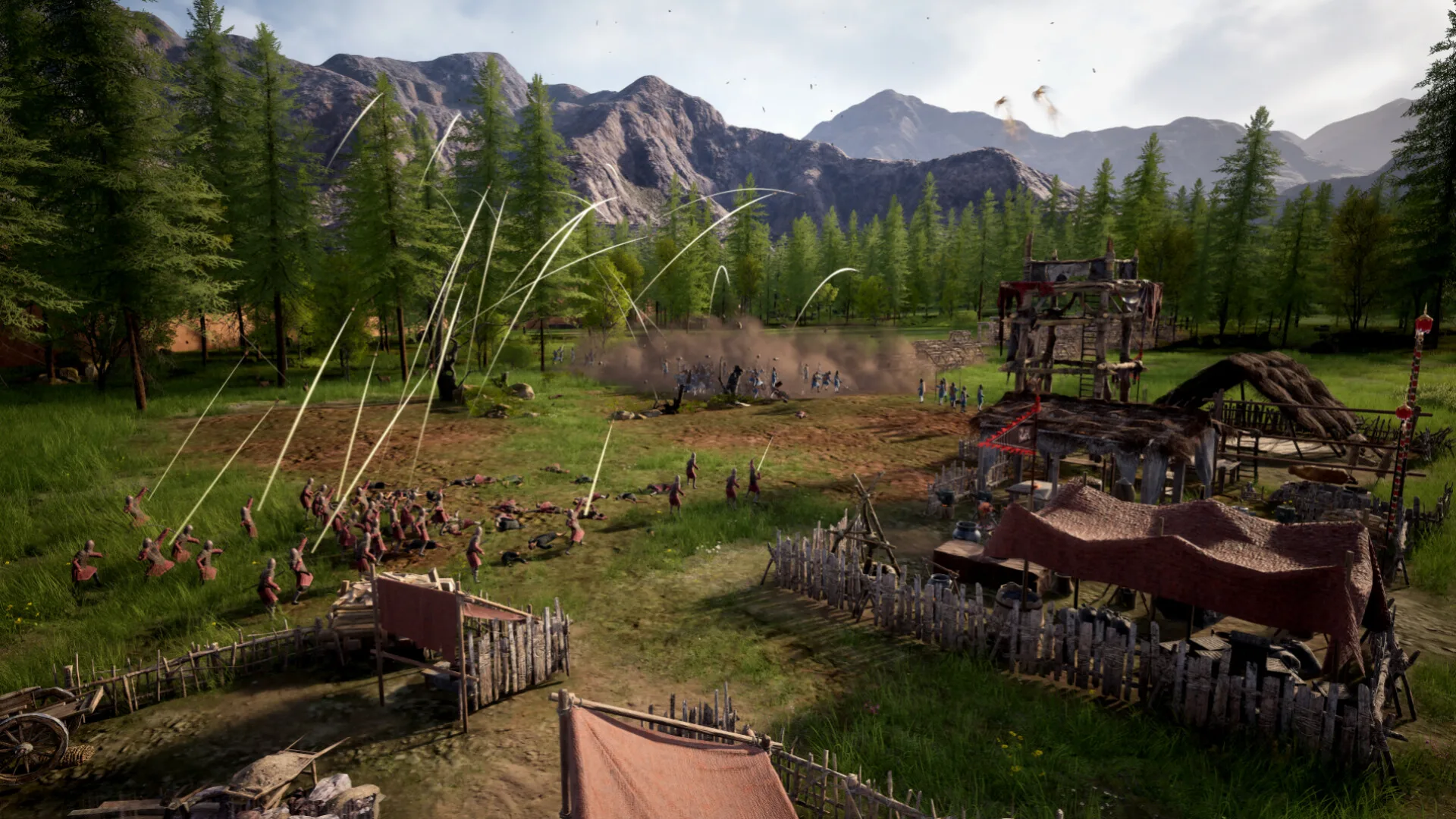
Warfare extends the city system rather than replacing it. Official material describes conscription, equipment production, chariots, line-drawn formations, encirclement and breakthrough, fortress assault and defense, walls, towers, catapults, ballistae, and battles with thousands of soldiers. A Phase 20 development update adds an important boundary: military equipment is managed through the armory, and recruitment priorities determine how eligible people are drawn into units.
| Decision | Immediate gain | City cost to watch | Recheck before committing |
|---|---|---|---|
| Recruit more troops | More bodies for defense or field operations | Fewer workers in farms, transport, workshops, and construction | Free labor, upcoming harvest, and essential delivery queues |
| Expand the armory chain | More equipment available for recruitment | Raw materials, crafters, carriers, and specialized storage shift toward war | Inputs, armory capacity, and competing civilian production |
| March during a busy season | Earlier pressure on an enemy or threat | Military attention overlaps planting, cultivation, harvest, or winter preparation | Food and fuel reserve plus the workers left behind |
| Build heavier defenses | Walls and machinery improve stronghold protection | Large construction and material demand before the attack arrives | Build time, route access, and whether mobile forces are still needed |
| Sustain a larger standing force | Faster response to invasion | Longer-lasting labor and equipment pressure | Whether the economy remains stable outside emergency conditions |
The matrix is not a hidden formula. It is a reminder that military readiness has a civilian bill. A force that wins the battle but leaves the harvest uncollected can still lose the larger campaign. Conversely, delaying recruitment until every store is perfect can leave the settlement undefended. Mandate Order’s tension lives in that timing decision.
Retainers, policy, and diplomacy
Retainers connect named schools of thought to governance and strategy. The official store lists Confucianism, Daoism, Mohism, Legalism, Militarism, Agriculturalism, and others, with retainers assigned to city governance, military command, diplomatic negotiation, and policy development. A nine-grid national-policy system works alongside court debate, while school affiliations influence direction.
Diplomatic choices include alliances, ceasefires, trade, and cooperation against powerful enemies. Titles and relations therefore sit beside the physical economy: trade can alter access to goods, peace can buy development time, and policy can change which pressure the settlement handles well. The sources do not provide a complete retainer roster, policy tree, numerical effect table, or universal combination guide for the launch build, so this page does not rank schools.
For a new campaign, treat retainers and policies as part of a development thesis. If the map or city is constrained by food, military equipment, trade access, or public order, evaluate appointments and debates against that actual constraint. A prestigious bonus that does not address the current bottleneck may be less useful than a modest effect in the part of the loop that is failing.
Ritual adds another layer. The store says sacrifices to Heaven and Earth interact with natural disasters, calamities, and event outcomes. That does not remove preparation: it places event judgment beside reserves, resilience, and recovery capacity. Exact probabilities and event tables are not published in the audited sources.
How pressure changes as the settlement grows
The early stronghold problem is usually legibility: enough homes, food, roads, jobs, and valid storage to make the first loops work. Growth changes the question from “Is this building active?” to “Can the network absorb distance, competing priorities, and disruption?”
Founding
Make the loop visible
Keep essential routes short, avoid exhausting the starting workforce, and confirm that harvested and processed goods have valid destinations.
Expansion
Separate capacity from throughput
More buildings increase theoretical output; roads, carriers, storage, and labor determine realized output. Add neighborhoods without losing access to water, food, and fuel.
Militarization
Budget the civilian loss
Armories, defenses, and units compete with the economy. Mobilize against a forecast, not simply because recruitment is available.
State building
Expect the frontier to move
Policies, retainers, trade, diplomacy, new maps, upgrades, and later-game goals widen the decision space—some now, some still planned.
This pressure ladder is an editorial synthesis, not an official sequence of victory stages. Its value is to keep the diagnostic scale appropriate. A single missing carrier may explain an early stall; a mature city may instead have a structural conflict between seasonal work, army size, road geometry, storage specialization, and policy direction.
Launch build versus Early Access roadmap
Digital Sky’s store statement is unusually clear about the boundary. The current build contains the core loop, while the path to 1.0 is intended to add breadth, depth, feedback, and technical refinement. Plans can change with development and player feedback.
| Area | Live in the launch build | Named for further work | PlayerMemo reading |
|---|---|---|---|
| World | Sandbox stronghold construction with terrain, resources, seasons, and weather | New maps with different terrain, resources, and survival conditions | Buy for the present map experience, not the future variety. |
| City development | Residences, farms, roads, stores, workshops, walls, and military facilities | Building upgrades and more complete city-state development | The construction loop is live; its progression ceiling is still expanding. |
| Agriculture | Four-season farming and food logistics | Livestock and richer agricultural production chains | Seasonal crop planning is current; broader agriculture is future scope. |
| Governance | Retainers, schools of thought, policy, titles, diplomacy, and trade | More retainers, schools, national policies, and governance paths | The framework is usable now; roster and route diversity should grow. |
| Warfare | Conscription, formations, chariots, invasions, sieges, walls, and defense machinery | New unit types, defenses, and enemy attack methods | Large battles are present, while pathfinding and balance remain refinement areas. |
| Long game | A complete core loop according to the developer | Richer middle- and late-game goals and long-term development | Players buying chiefly for an extended endgame have the strongest reason to wait. |
| Usability | Playable launch systems and 12-language support | Better tutorials, feedback, performance, compatibility, stability, and balance | Early Access tolerance is part of the purchase decision. |
The roadmap is useful evidence of direction, not a delivery contract. It should answer “What does the team know it wants to improve?” rather than “What will definitely arrive on a specific date?” Official Early Access statement · Roadmap release
Buying and running Mandate Order
Steam also discloses that some multilingual localized text is AI-generated and that parts of the code and art assets contain AI-generated content. That may matter to a buyer independently of performance or genre fit, so it belongs in the brief rather than being buried below the requirements.
What remains unknown
The official sources are broad enough to explain the launch proposition, but not yet precise enough for formula-level guides.
Our next evidence pass should turn the dependency map into tested interface guidance: where labor reassignment appears, how storage filters are communicated, how route failures surface, what winter reserves look like in practice, and what a conscription wave removes from the economy. Until that original-play pass is complete, this page separates official facts from PlayerMemo’s clearly labeled diagnostic synthesis.
Fact provenance
Evidence log
- mandate-order-steam-storeMandate Order on Steam
- mandate-order-official-siteMandate Order — Official Website
- mandate-order-launchMandate Order Early Access launch announcement
- mandate-order-phase-20Mandate Order Development Phase 20
- mandate-order-launch-briefingFrom Workers and Grain to Walls and War — What Mandate Order Includes at Early Access Launch
- mandate-order-roadmapA City Can Survive, But Can It Become a State? — Mandate Order's Roadmap After Early Access Launch
Asset provenance
Media log
Pre-release developer media is used for editorial context; UI and values may change. PlayerMemo will remove it on a rights-holder request.
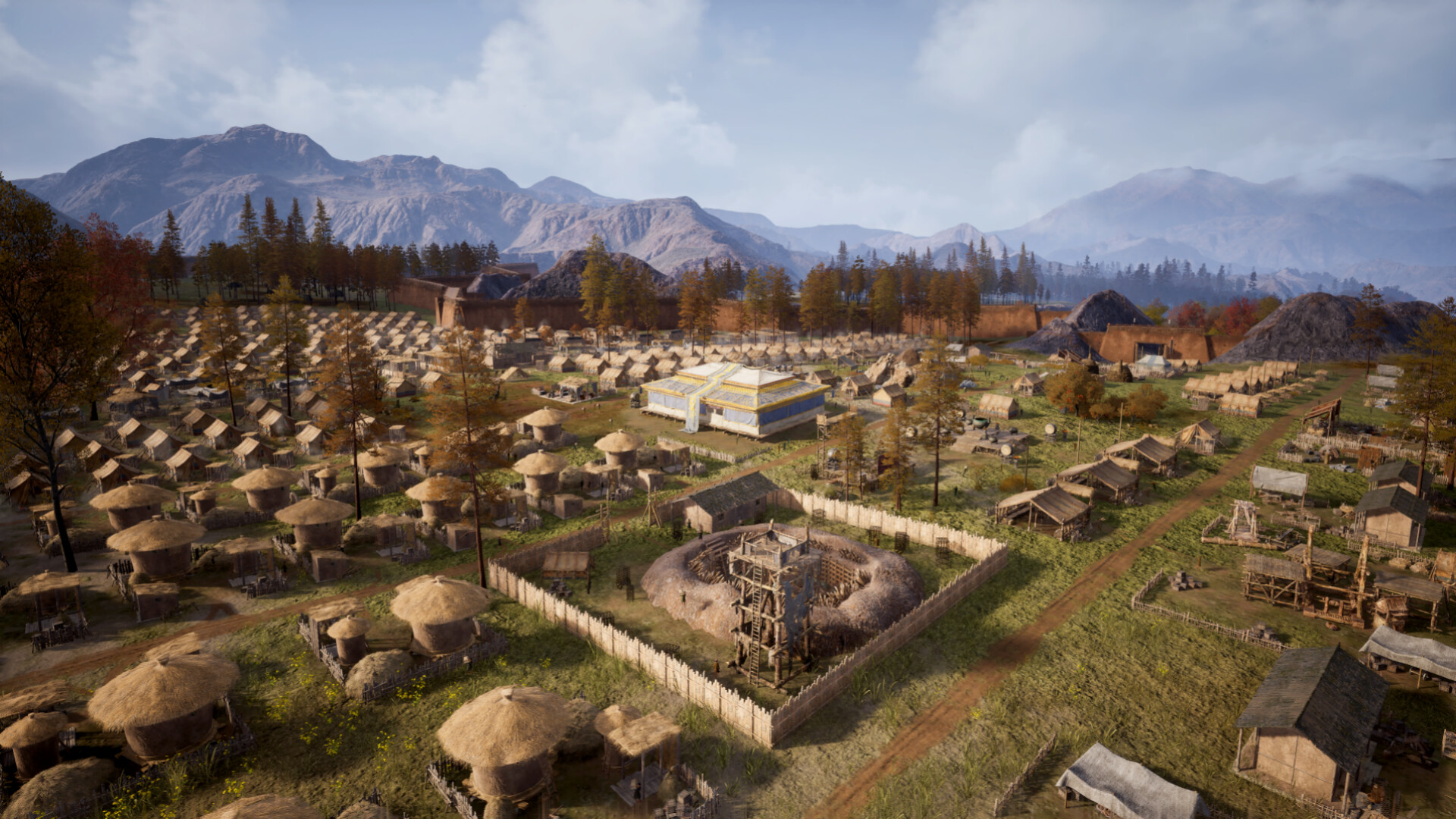
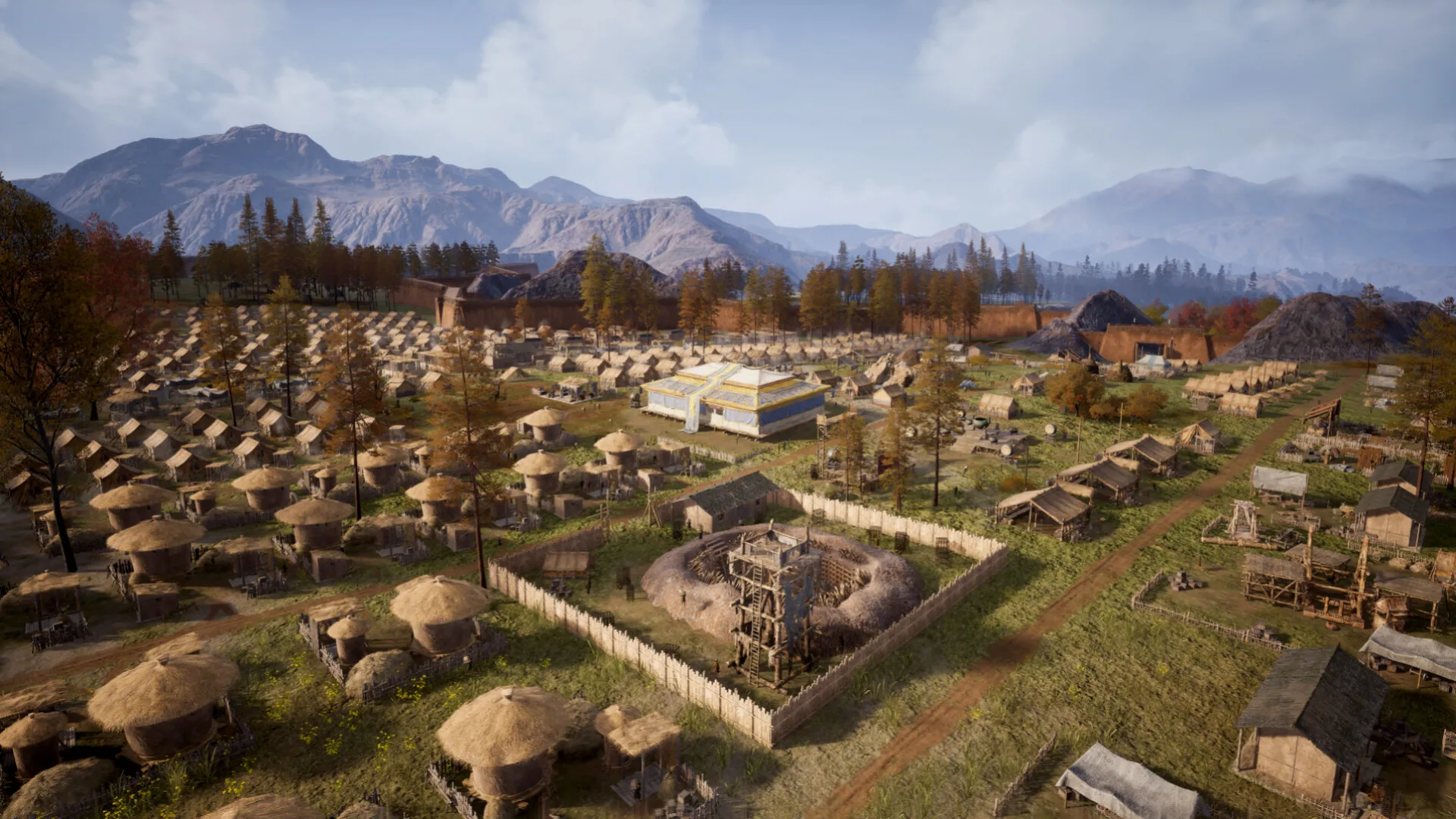
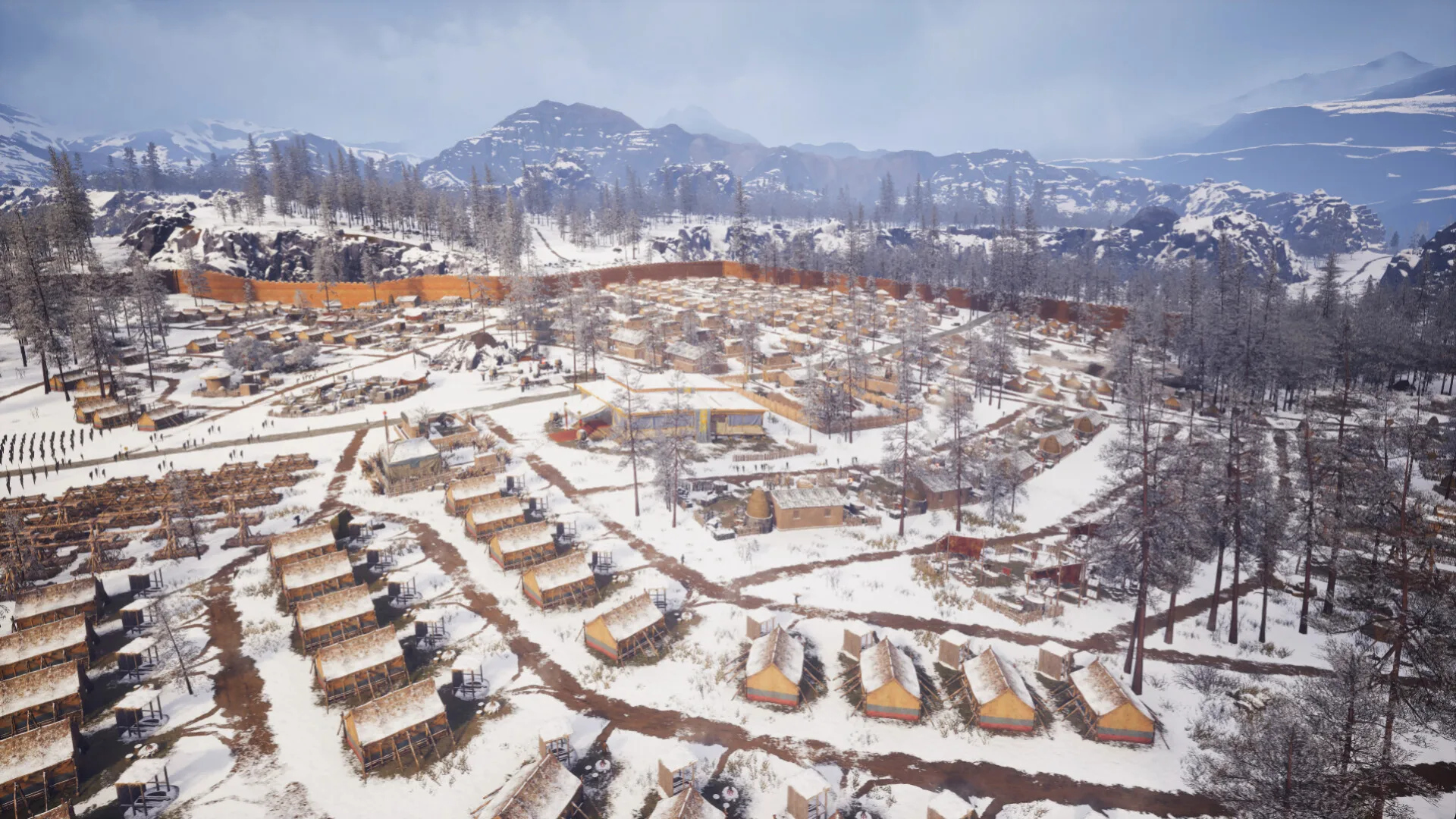
An established settlement and its surrounding production landscape. © DigiSky Games.
- Credit
- © DigiSky Games
- Use
- Identify Mandate Order in its dossier hero and homepage library card
- Basis
- Official DigiSky Games Steam store gallery asset; limited editorial use for identification and commentary with attribution and takedown on request
- Retrieved
- 2026-08-12
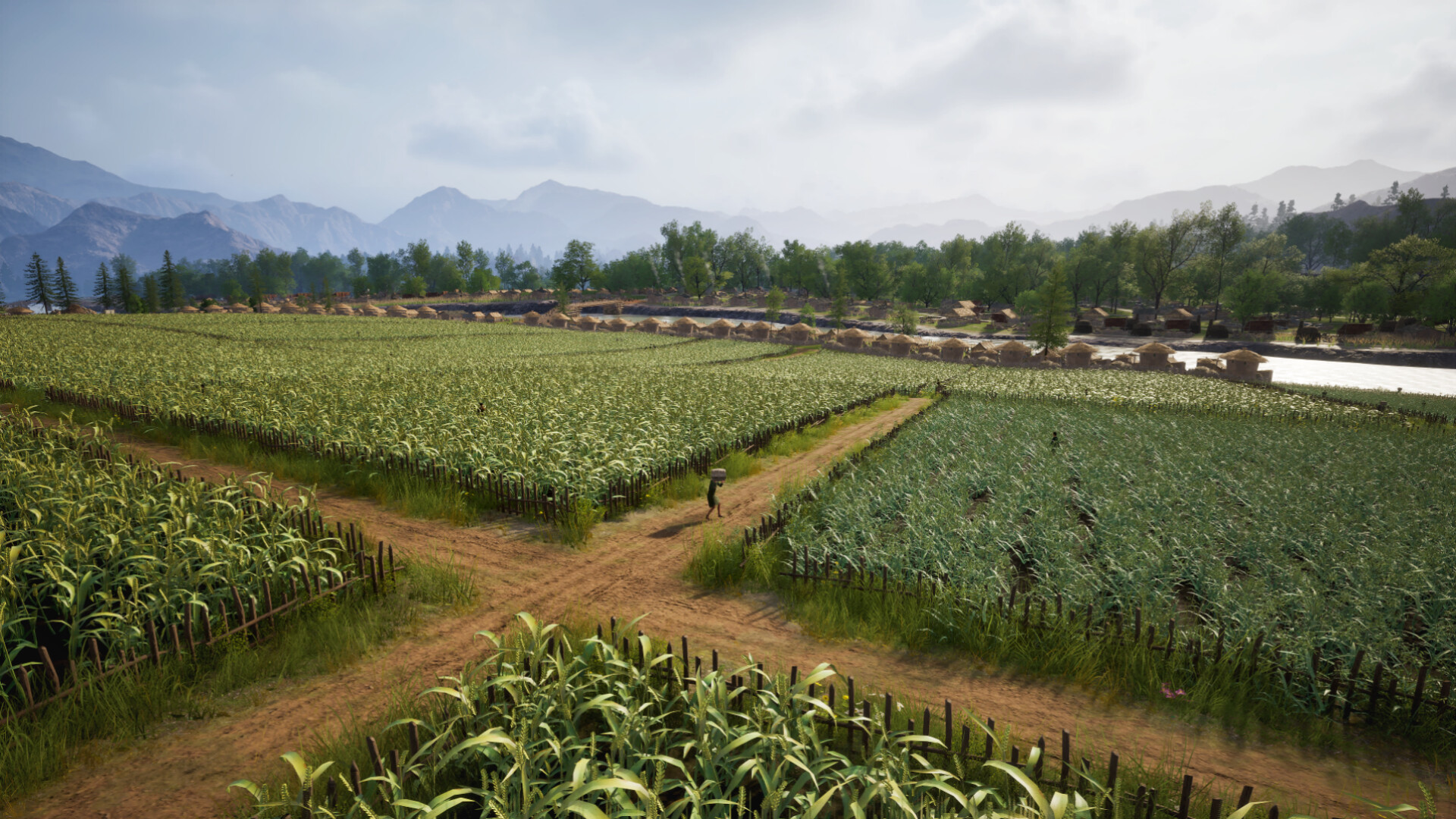
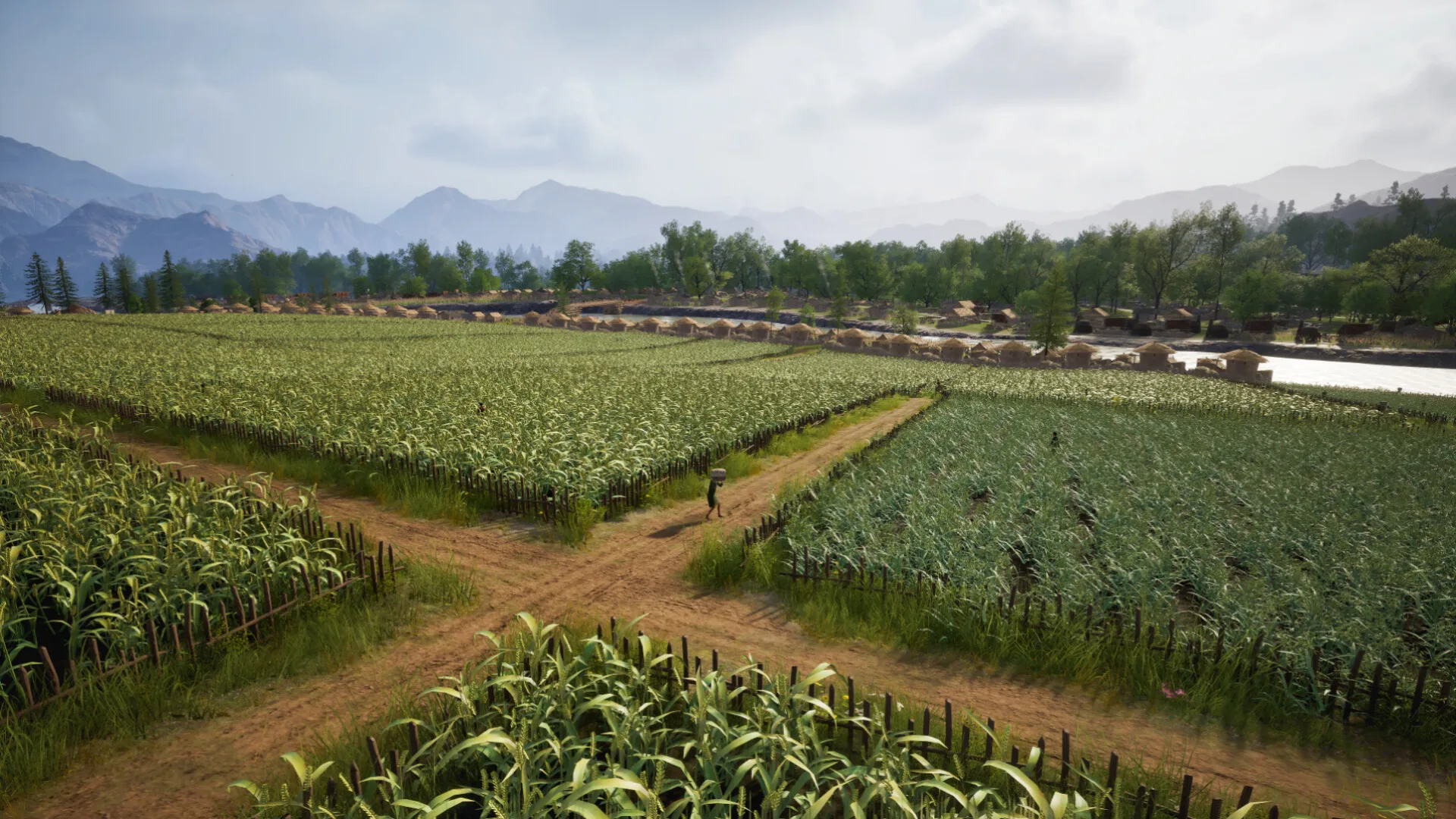
Fields turn seasonal timing into a settlement-wide constraint. © DigiSky Games.
- Credit
- © DigiSky Games
- Use
- Illustrate the seasonal farming and food-security briefing
- Basis
- Official DigiSky Games Steam store gallery asset; limited editorial use for identification and commentary with attribution and takedown on request
- Retrieved
- 2026-08-12
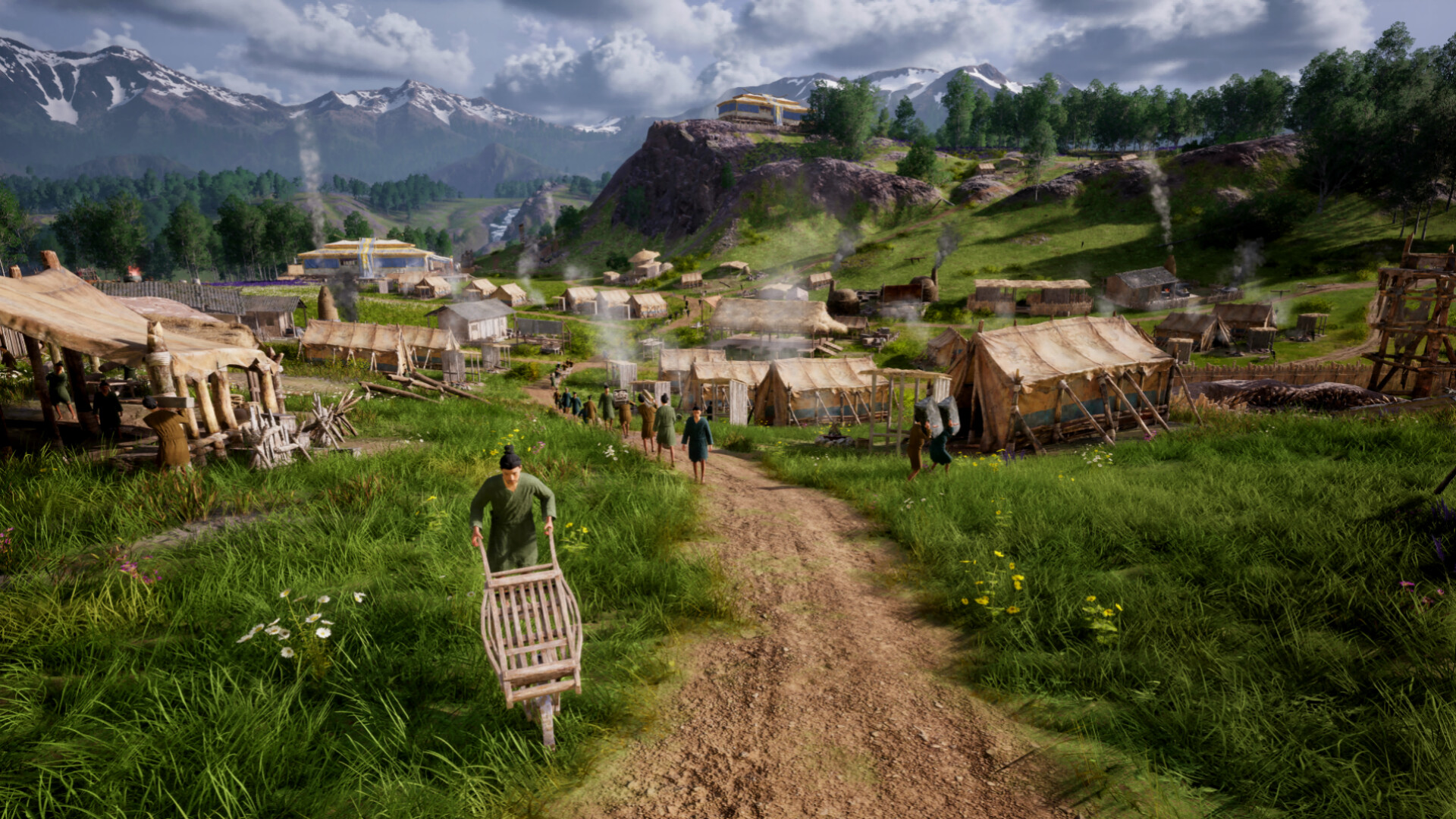
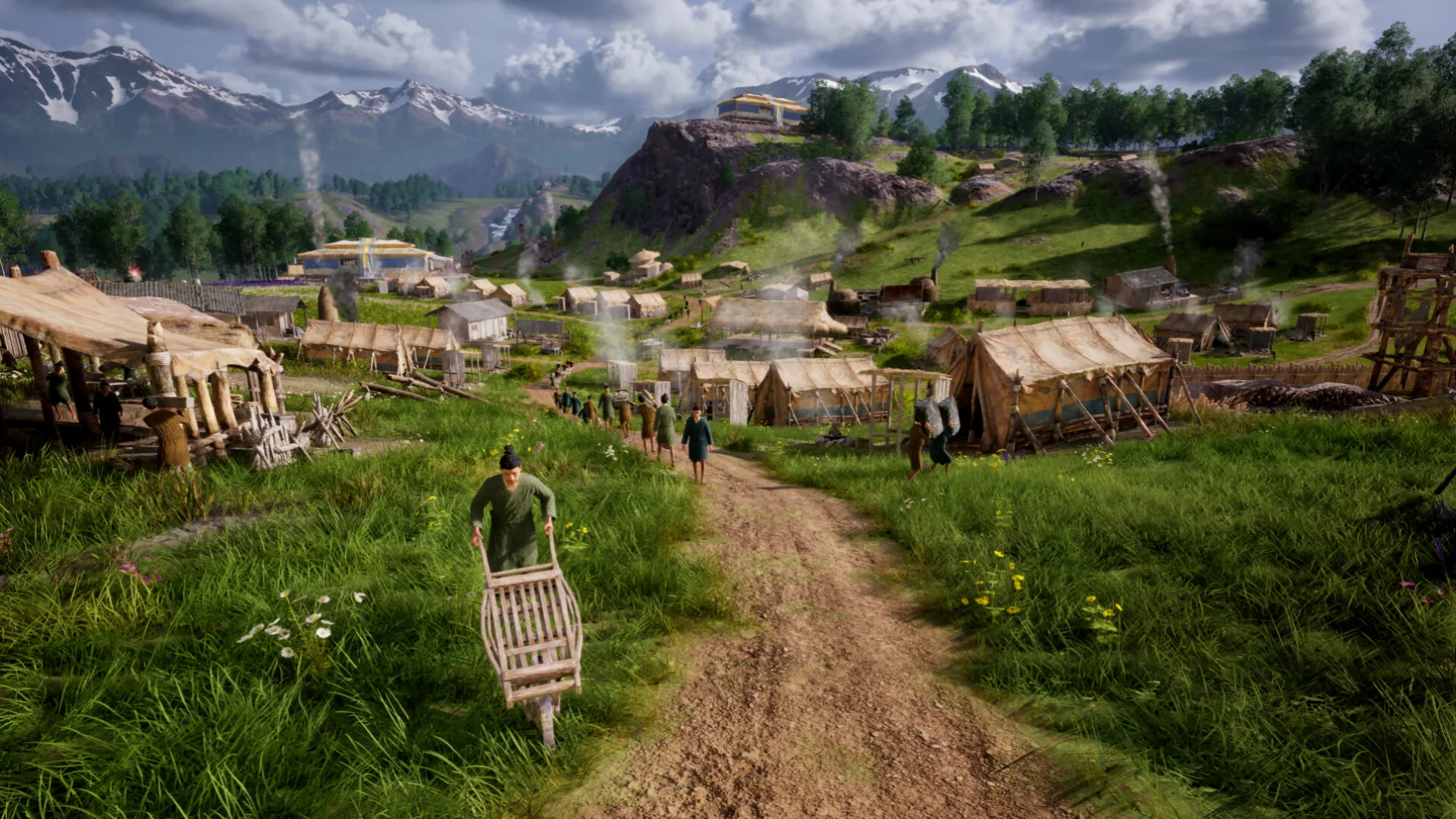
Roads connect labor, storage, and production rather than merely decorating the city. © DigiSky Games.
- Credit
- © DigiSky Games
- Use
- Illustrate population movement, roads, and the connected logistics system
- Basis
- Official DigiSky Games Steam store gallery asset; limited editorial use for identification and commentary with attribution and takedown on request
- Retrieved
- 2026-08-12
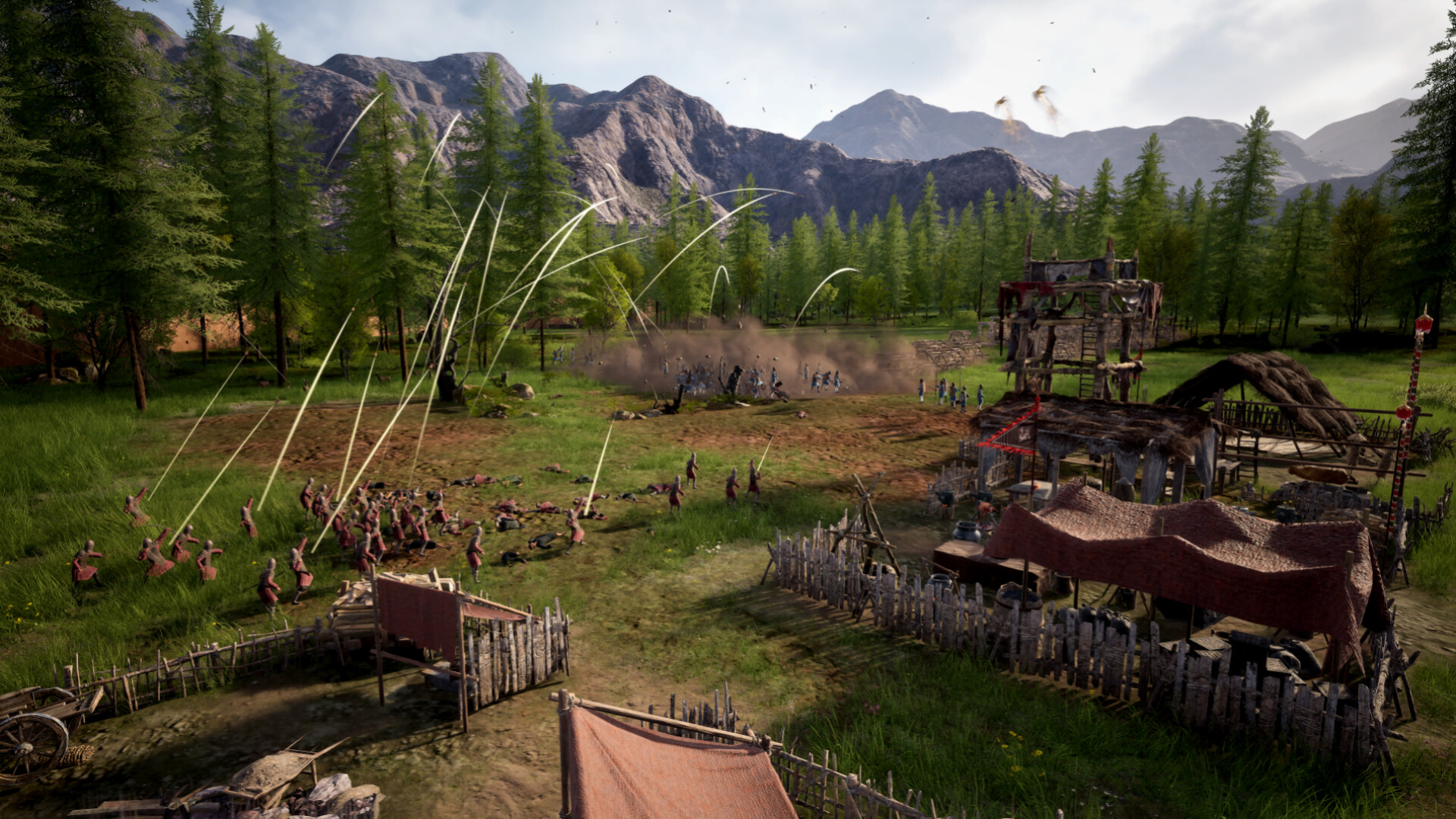
Military pressure reaches back into the civilian economy that equips and staffs it. © DigiSky Games.
- Credit
- © DigiSky Games
- Use
- Illustrate the briefing on mobilization and settlement warfare
- Basis
- Official DigiSky Games Steam store gallery asset; limited editorial use for identification and commentary with attribution and takedown on request
- Retrieved
- 2026-08-12
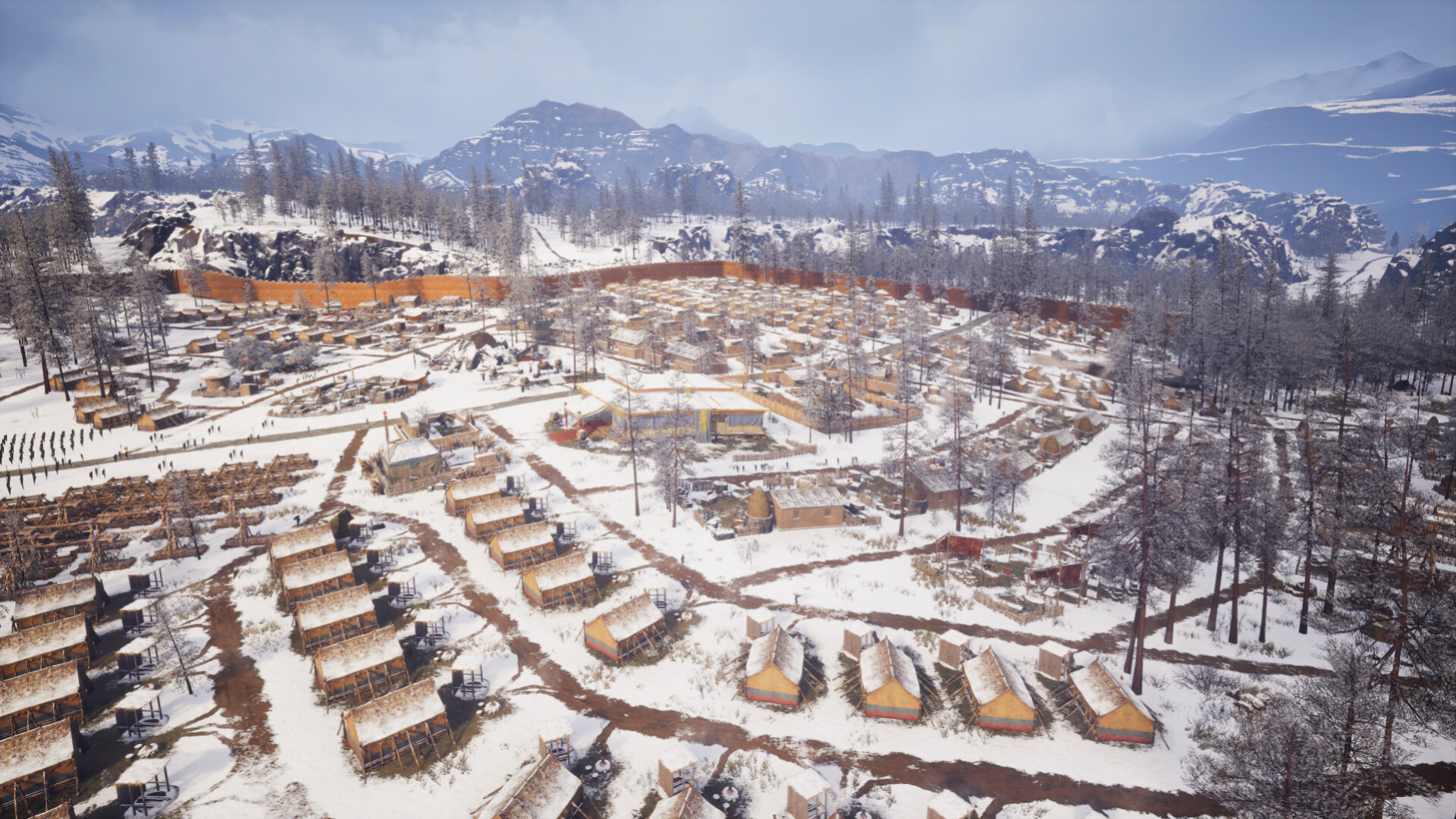
Winter adds fuel and food pressure to the same connected city system. © DigiSky Games.
- Credit
- © DigiSky Games
- Use
- Illustrate winter fuel pressure and seasonal settlement risk
- Basis
- Official DigiSky Games Steam store gallery asset; limited editorial use for identification and commentary with attribution and takedown on request
- Retrieved
- 2026-08-12